八邑的联系
Poit Ip Network
与本地核心潮人社团紧密相连,共同构建坚固的地缘网络
Deeply Connected with Teochew Organizations to Build a Strong & Cohesive Community Network
潮阳会馆
TEO YEONG HUAI KUAN
- 229 River Valley Road Singapore 238340
- +65 6737 5392
- +65 6732 3350
南洋普宁会馆
NANYANG PHO LENG HUI KUAN
揭阳会馆
KITYANG ASSOCIATION
惠来同乡会
THE HUILAI COUNTRYMEN ASSOCIATION
潮安会馆
TEO ANN HUAY KUAN
澄海会馆
THENG HAI HUAY KUAN
饶平会馆
RAO PING ASSOCIATION
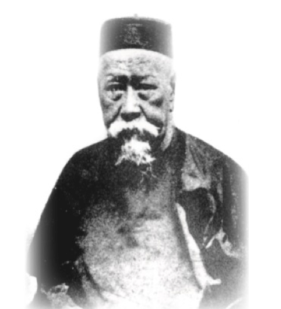
义安公司创始人佘有进先生
Founder of Ngee Ann Kongsi Mr Seah Eu Chin
1830 年,佘有进召开澄海及海阳二县 12 姓氏代表,协商捐资合组一所潮人机构,以潮州古名义安郡命名,其宗旨为祭祀及联络乡侨感情;集资购置坟地供潮人埋葬。
经过多年的酝酿与筹备,在 1845 年,义安公司终于正式成立,成为新加坡首个潮人公众社团。至此,代表早期地缘性结合体的庙宇遂被承载更大社会意义的社团所取代。
In 1830, Mr Seah Eu Chin gathered representatives from 12 surnames across Chenghai and Haiyang counties to raise funds and establish a Teochew organization named Ngee Ann Kun, after the ancient name of Chaozhou Prefecture. Its aims were to conduct ancestral worship, strengthen ties among fellow provincials, and purchase burial grounds for the Teochew community.
After years of preparation, Ngee Ann Kun was officially established in 1845, becoming Singapore’s first public Teochew association. Consequently, temples—which previously represented early territorial alliances—were replaced by civic organizations carrying broader social significance.
1933 年,义安公司的新章程订立之后,义安公司正式向政府注册为一个慈善机构。义安公司拥有殡仪馆,还接管粤海清庙的产业权。教育一向是公司的基石,如何让他们的子女出人头地,过更好的生活。因此公司的兴学目标比前跨进一步。
纵观义安公司的重要功能有,义安公司当时所筹募的资金,主要是用来买地作为建设庙宇以及安葬潮人之用。除此之外,则是用在公益慈善事业和祭祀方面。从义安公司的宗旨来看,具有积极的文化意义和重要的社会功能。义安公司通过处理族群的营葬和祭祀,同时也有效地发挥了团结、凝聚、整合社群的功能。
In 1933, following the formulation of its new constitution, Ngee Ann Kongsi was officially registered as a charitable organisation. Ngee Ann Kongsi owned funeral parlours and took over the property rights of Wak Hai Cheng Bio (Yueh Hai Ching Temple). Education had always been its cornerstone; driven by the desire to help their children succeed and secure a better life, it consequently took a significant step forward in its educational mission.
Over the years, Ngee Ann Kongsi raised funds primarily to purchase land for building temples and burying Teochew immigrants. Beyond this, resources were dedicated to public welfare, charity, and ancestral worship. Propelled by its core mission, Ngee Ann Kongsi held profound cultural significance and vital social functions. By managing the community’s burials and rituals, it made the Teochew community united, cohesive, and integrated.
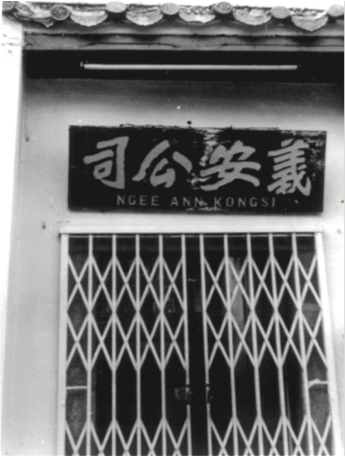
义安公司
The Ngee Ann Kongsi
391A Orchard Road #24-04/05/06
Ngee Ann City Tower A (S) 238873
Tel : +65 6737 9555
Fax : +65 6733 3165
For Data Protection Matters, Please Email to: dpa@nak.org.sg
For a copy of The Ngee Ann Kongsi Code of Conduct, Please Email to: info@nak.org.sg
For general enquiries, Please Email to: general@nak.org.sg
Operating Hours :
Monday – Friday 8.30am-5.30pm
Saturday, Sunday and Public Holidays – closed

摄于 1921 年,坐者左起第十人为林义顺先生
Photographed in 1921. Seated, 10th from the left is Mr Lim Nee Soon
醉花林俱乐部成立于 1845 年,创始人为陈成宝。鉴于潮人莅新日众,商业渐盛,应酬日繁。亟需一幽雅所在,藉以交换知识联络感情及休闲去处,于是倡组“醉花林俱乐部”,暂假庆利路门牌 190 号茅屋为会所。1879 年陈成宝去世后,陈永锡、王柘榴、吴合弟、陈亚两、佘智章、庄振浩、刘老四、陈明和、何瑞吉及黄金炎等十人,各人捐资四百元,凑足四千元向陈氏家属购得该地作为永久会址。这十人便成为醉花林俱乐部的信托人。它也是新加坡历史最悠久的俱乐部。
Founded in 1845 by Mr Tan Cheng Poh, Chui Huay Lim Club was established in response to the rapid growth of the Teochew community, its flourishing business activities, and a growing need for social networking. It was created as an elegant venue for Teochews to exchange knowledge, strengthen friendships, and enjoy leisure. The club was initially housed in a thatched attap house at 190 Keng Lee Road. After Mr Tan’s passing in 1879, ten prominent leaders each donated 400 dollars, raising a total of 4,000 dollars to purchase the property from the Tan family as the club’s permanent site. These ten individuals became the club’s first trustees. Today, Chui Huay Lim Club is recognized as Singapore’s oldest club.
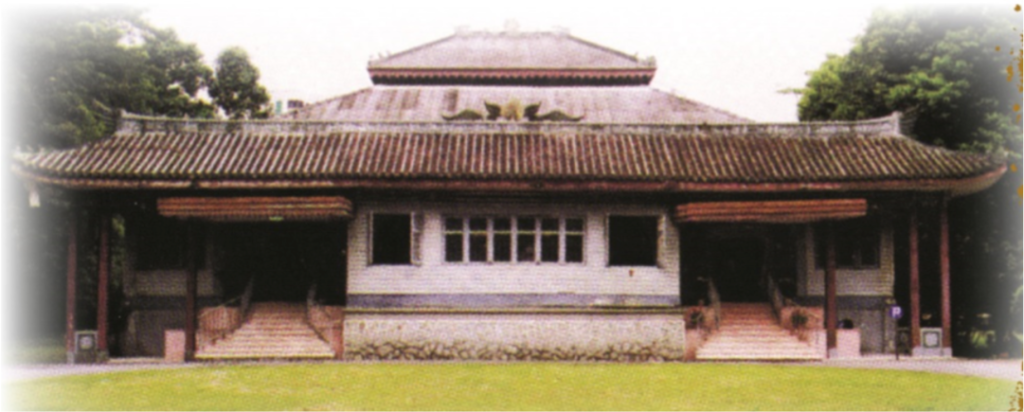
早期的醉花林俱乐部
Early Chui Huay Lim Club
俱乐部组织目的在于联络潮人感情及消闲去处,实际昔日举凡潮人社会公益、教育、慈善事业,都集中在俱乐部商议筹划。据知义安公司、端蒙学堂、潮州八邑会馆以及馀娱儒乐社等组织,大部分领导层都是俱乐部主事与会员,且各个组织之重要事件,事先均在俱乐部商谈 后,才正式提到会议讨论。也就是说,在早期它是领导潮人社会从事种种活动的中心,着实扮演了社会上一个重要的角色。因此一般商人 若能被推荐参加成为会员,往往被视为一项极为光荣的事。醉花林俱乐部在董事部领导下进行多项改革与发展,并积极重建新会所。
The club’s primary mission was to foster fellowship among the Teochew community and provide a venue for leisure. In practice, however, early discussions regarding Teochew public welfare, education, and charitable initiatives were all centred at the club. Most of the leadership of prominent organizations—such as Ngee Ann Kongsi, Tuan Mong School, Teochew Poit Ip Huay Kuan, and the Er Woo Amateur Musical & Dramatic Association—were club officers and members. Major decisions for these organizations were often deliberated at the club before being formally presented at their respective meetings. Consequently, Chui Huay Lim Club served as the central hub driving various activities for the early Teochew community, playing a vital role in society. As such, local merchants considered it an immense honour if they were recommended for membership. Today, under the leadership of its Board of Directors, the club has undertaken numerous reforms and development projects, including the active reconstruction of its new clubhouse.
醉花林俱乐部
CHUI HUAY LIM CLUB
No. l90, Keng Lee Road Singapore 308409
Tel: +65 6253 0111
Fax: +65 6256 9672
Email: members@chlc.sg
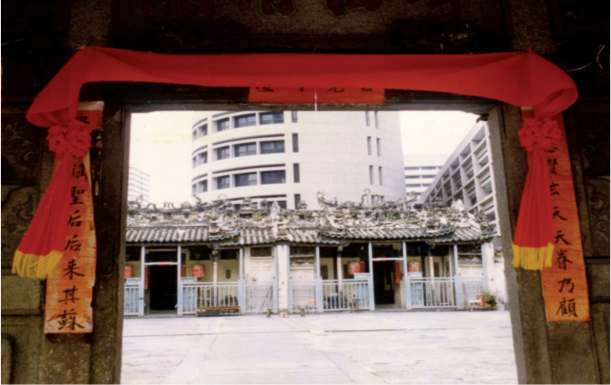
随着移居新加坡的潮人与日俱增,潮人社群逐渐形 成,伴随而来的便是宗教信仰的普及化。宗教信仰除了是移民从祖籍带到移居地的一种传统文化外,也是他们在彷徨和承受极大压力的生活中祈求心境安宁和寻求精神寄托的重要渠道,更成为他们生活上不可分割的一部分,庙宇也便应运而生。
在新加坡出现的第一所潮人古庙,据说是约在乾隆初年由林泮所建的“粤海清庙”,初时只是一亚答屋。昔日初抵的移民必到庙宇礼拜天后圣母,以答神恩。
As the number of Teochew immigrants in Singapore grew, a distinct community formed, and with it the widespread adoption of religious faith. Far from just a traditional culture carried over from their homeland, religious faith served as a vital anchor—offering spiritual solace, peace of mind, and emotional refuge amidst the anxieties and immense pressures of their new lives. It became an inseparable part of their daily existence, giving rise to the establishment of temples across the settlement.
The earliest Teochew temple in Singapore is Yueh Hai Ching Temple, reportedly built by Mr Lin Pan during the early Qianlong period (the mid-18th century). It began as a humble attap hut. In those early years, newly arrived immigrants made it a priority to worship Tianhou Shengmu (culturally known as Mazu) at the temple, offering prayers of gratitude for a safe voyage and seeking blessings for their new lives.
19 世纪 20 年代,被当时在暹罗、新加坡之间从事航运的王钦、王丰顺等改建为庙。随着移民的日增,天后圣母信仰在本地迅速传播开来,香火也愈来愈盛。1826年,粤海清庙在天后宫的基础上,增建了奉供玄天上帝的上帝宫。此后,粤海清庙一再扩建。
In the 1820s, the hut was rebuilt into a temple by Wang Qin and Wang Fengshun, who were engaged in the shipping trade between Siam and Singapore. As the immigrant population grew, devotion to Tianhou Shengmu spread rapidly across the settlement, attracting an increasing number of worshippers. In 1826, building upon the existing Tian Hou Gong, Shang Di Gong was added to enshrine Xuantian Shangdi. From then on, Yueh Hai Ching Temple underwent successive expansions.
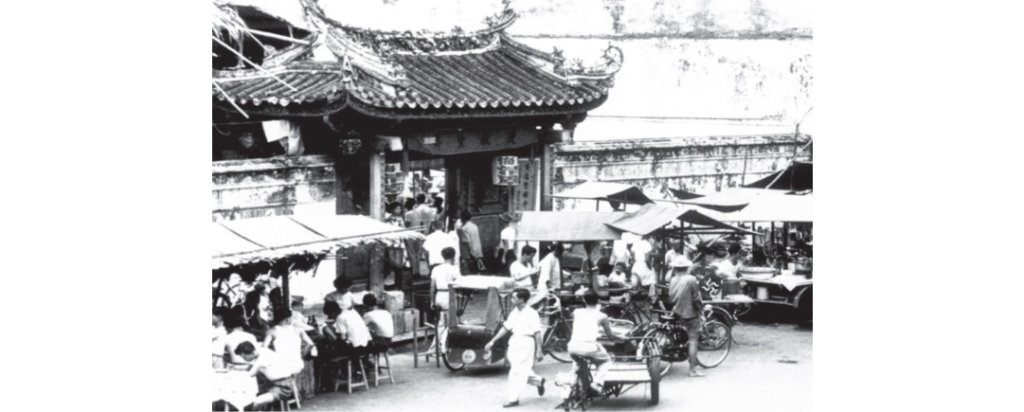
庙会的热闹场面
A Bustling Scene at the Temple
粤海清庙位于直落亚逸菲立街,潮人称为“大老爷宫”。庙前围墙筑有一门亭,门额书“粤海清庙”,墙内为一片广大的石埕,左边是上帝宫供奉的玄天上帝,右边是供奉天后圣母妈祖的天后宫,二庙相连,故称“孖庙”。而粤海清庙的名称,“粤”指广东,“海清”则是海路清平的意思,即为广东籍人士在海水清平之下安然乘船抵达南洋。实际上,在义安公司和潮州八邑会馆成立之前,粤海清庙是潮人社群的仲裁机构,通过非官方的管道在庙宇内为族群调解个人或商业纠纷、 家庭问题。
1845 年,潮侨领袖成立了“义安郡”,后改称“义安公司”,其宗旨是管理潮州人的公墓。这一年,义安公司接管了粤海清庙。粤海清庙即成为义安公司的产业,也就转由义安公司管理。当时,义安公司的办公室就设在庙内,无论是领导人或管理政策上,庙与公司实际上已结合为一体。义安公司兼理潮人在该庙祭祀玄天上帝及酬神事宜,并在原址上扩建和修缮古庙,使之成为一所颇具规模和壮观之华人庙宇。
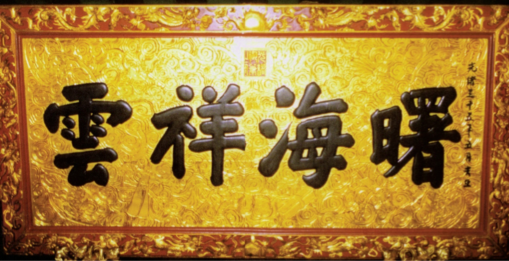
光绪二十二 年(1896),清朝皇帝御书“曙海祥云”金漆匾额赐予粤海清庙,今天仍高悬于庙里天后宫正殿上。在新加坡的华人寺庙 中,只有粤海清庙和闽帮的天福宫获赐清帝御题,可见其当时备受重视之程度。今天,粤海清庙仍然是义安公司名下的产业,也仍是最具代表性的潮人庙宇,并已被列为受国家保护之古迹。粤海清庙被列为国家古迹,除了它具有深远的历史意义外,也因为它本身便是一座极具特色的庙宇建筑。
Located on Philip Street in Telok Ayer, Yueh Hai Ching Temple is affectionately known by the Teochew community as “Tua Lao Ya Bio”. A gate pavilion fronts the boundary wall, bearing the temple’s name, which opens into a vast stone courtyard. Inside, the temple features two interconnected halls: Shang Di Gong on the left, which enshrines Xuantian Shangdi, and Tian Hou Gong on the right, dedicated to Mazu. This unique architectural layout earned it the nickname “Ma Miu” (Twin Temples). The name “Yueh Hai Ching” carries a deep meaning: “Yueh” refers to Guangdong province, while “Hai Ching” signifies calm and peaceful seas, representing the safe maritime voyages of Guangdong immigrants to Southeast Asia. Before the establishment of Ngee Ann Kongsi and Teochew Poit Ip Huay Kuan, the temple served as the primary arbitration body for the Teochew community, providing informal channels within its sacred walls to mediate personal, domestic, and commercial disputes.
In 1845, Teochew immigrant leaders established “Ngee Ann Kun” (later renamed Ngee Ann Kongsi) to manage the community’s public cemeteries. That same year, Ngee Ann Kun took over the management of Yueh Hai Ching Temple, incorporating it into its formal property portfolio. At the time, Ngee Ann Kun established its office directly inside the temple grounds, effectively intertwining the leadership and management policies of both institutions. In addition to organizing community worship and thanksgiving ceremonies for Xuantian Shangdi, Ngee Ann Kun actively expanded and restored the ancient site, transforming it into one of Singapore’s most prominent Chinese temples.
In 1896, Emperor Guangxu of the Qing dynasty bestowed an imperial plaque bearing the inscription “Shu Hai Xiang Yun” (Auspicious Clouds over a Peaceful Sea) upon the temple. Today, it still hangs above the main altar of Tian Hou Gong. Among all the Chinese temples in Singapore, only Yueh Hai Ching Temple and the Hokkien community’s Thian Hock Keng Temple received such imperial honours, underscoring its immense historical significance. Today, the temple remains under the ownership of Ngee Ann Kongsi. As a celebrated icon of Teochew culture, it has been gazetted as a National Monument—a testament not only to its profound historical legacy but also to its unique and distinctive architectural heritage.
古庙的潮州传统建筑格式,庙里根据历史神话、民间故事和英雄事迹塑造的泥雕和木刻,形象生动,栩栩如生,不仅深具教化作用,还充分表现了潮州传统手工艺的高超艺术和丰富内容。
The ancient temple is renowned for its traditional Teochew architectural style, showcasing vibrant, lifelike wood carvings and clay sculptures inspired by historical myths, folklore, and heroic deeds. Far from mere decorations, these intricate masterworks served an educational purpose, instilling moral and cultural values while fully embodying the superb artistry and rich heritage of traditional Teochew craftsmanship.
粤海清庙
WAT HAI CHENG BIO (YUEH HAI CHING TEMPLE)
30B Phillip St Singapore 048696
Tel: +65 6536 6851